The Twilight Zone: The Door That Never Closed
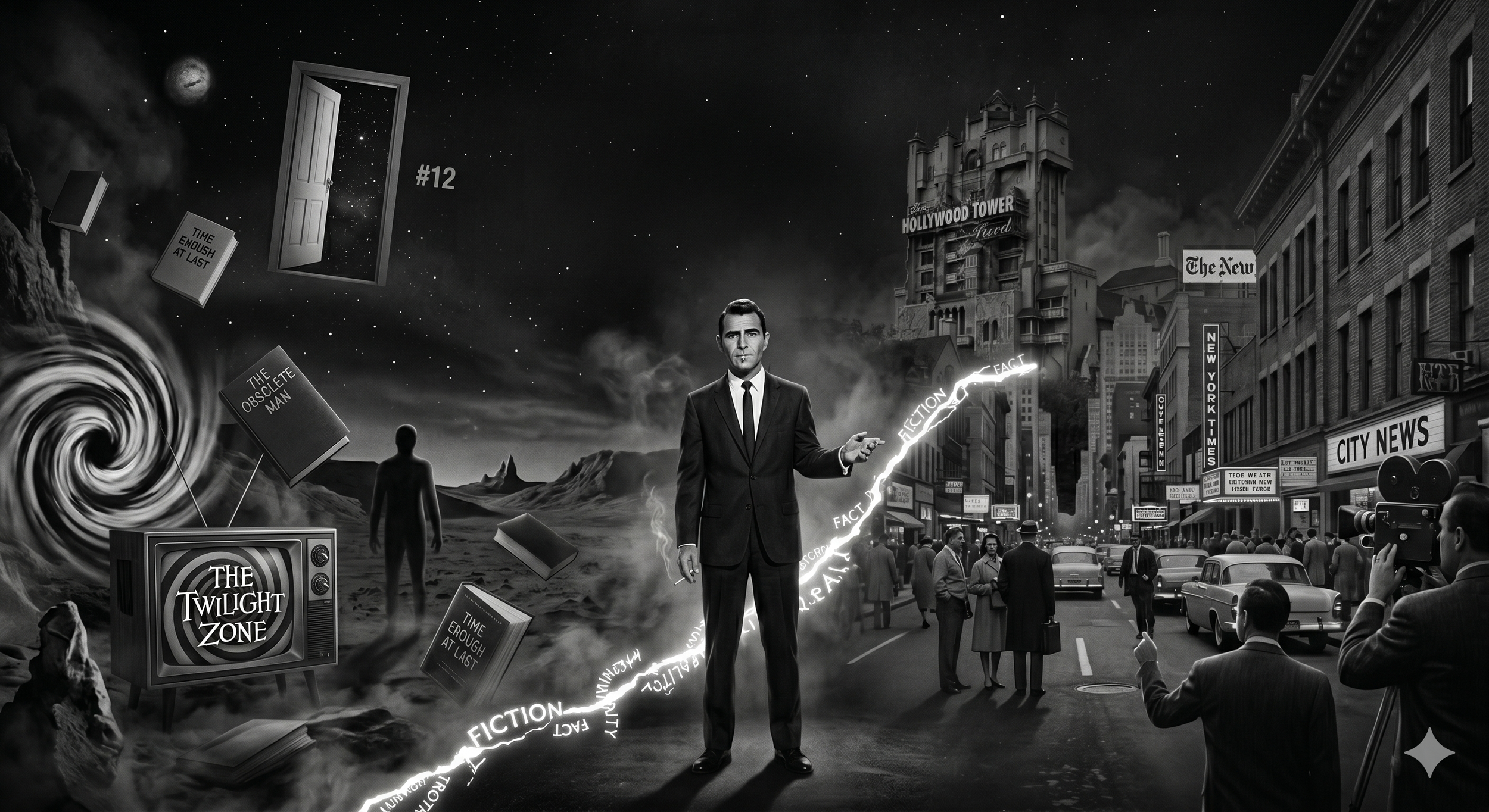
A depiction of Rod Serling Twilight Zone imagery.
The Twilight Zone, between fiction and non-Fiction. A Perspective on the show that blurred every boundary it touched. There is a line between fiction and reality that most storytellers respect. Rod Serling erased it. When The Twilight Zone premiered on CBS on October 2, 1959, it arrived not as mere entertainment but as something far more unsettling — a mirror disguised as a television show, reflecting truths that America was unwilling to confront directly. What makes the series enduringly fascinating, and what gives it a claim to significance far beyond the history of television, is precisely this: The Twilight Zone operated in the space where fiction became non-fiction, where allegory became journalism, and where the "impossible" became the most honest thing on the air.
The Genesis: A Writer at War with Censorship
The origin story of The Twilight Zone is itself a tale worthy of an episode. Rod Serling, a World War II paratrooper who carried shrapnel in his body and nightmares in his mind for the rest of his life, had already established himself as one of American television's most acclaimed dramatists. His teleplays Patterns (1955) and Requiem for a Heavyweight (1956) won him fame, Emmys, and, crucially, the fury of network censors.
When Serling wrote Noon on Doomsday, a drama loosely inspired by the murder of Emmett Till, CBS systematically stripped it of every racial reference until the story was unrecognizable. It was this act of institutional cowardice that pushed Serling toward science fiction, not out of love for the genre, but out of strategic necessity. As he reflected: "The sky is no longer the limit." Fantasy and science fiction offered him a Trojan horse. A story about aliens could be about racism. A story about a man lost in time could be about McCarthyism. A story about a monster on the wing of an airplane could be about the terrors no one believed you had seen.
This is the foundational paradox of The Twilight Zone: it was fiction at its most fictional populated by aliens, time travelers, and sentient machines, yet it was among the most truthful programming on American television. Serling himself drew the distinction with characteristic precision: "Fantasy is the impossible made probable. Science Fiction is the improbable made possible."
The Hollywood Dimension
The relationship between The Twilight Zone and Hollywood is one of mutual mythology. The show was produced in Hollywood, drew from the talent pool of Hollywood, and in many ways became a metaphor for Hollywood itself, a place where appearance and reality are perpetually negotiated, where glamour conceals anxiety, and where every story is, at some level, about performance.
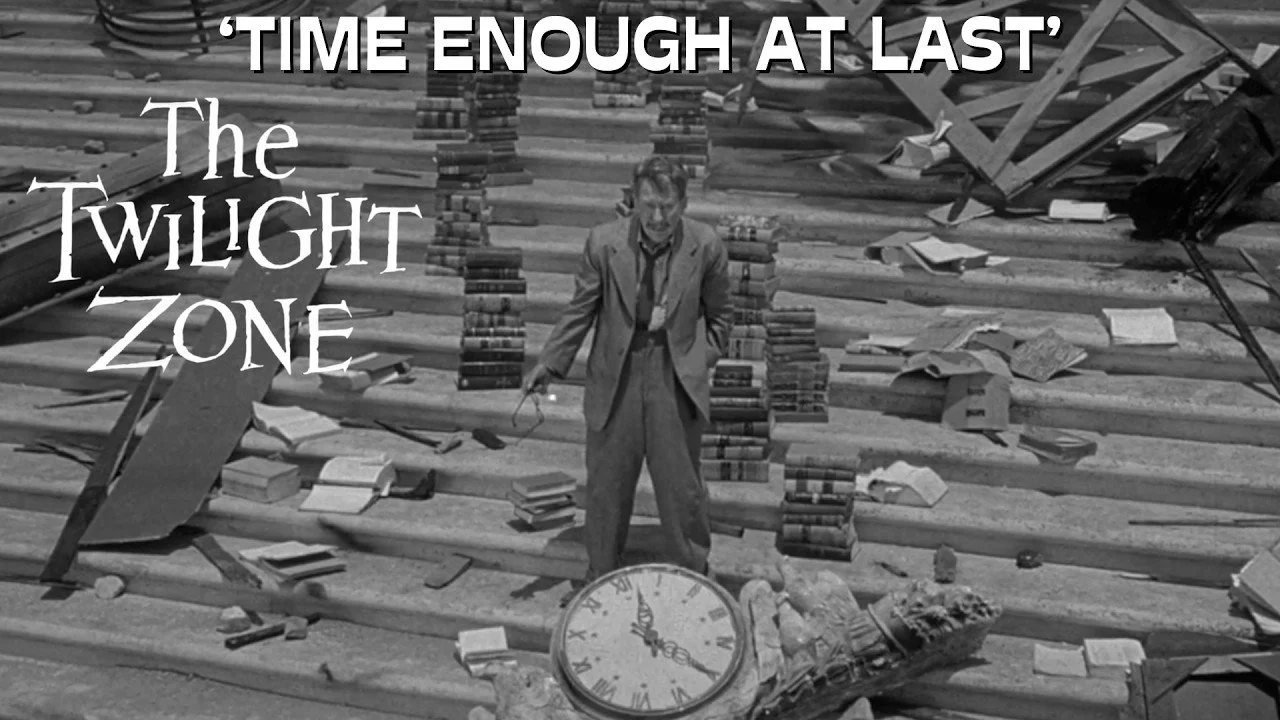
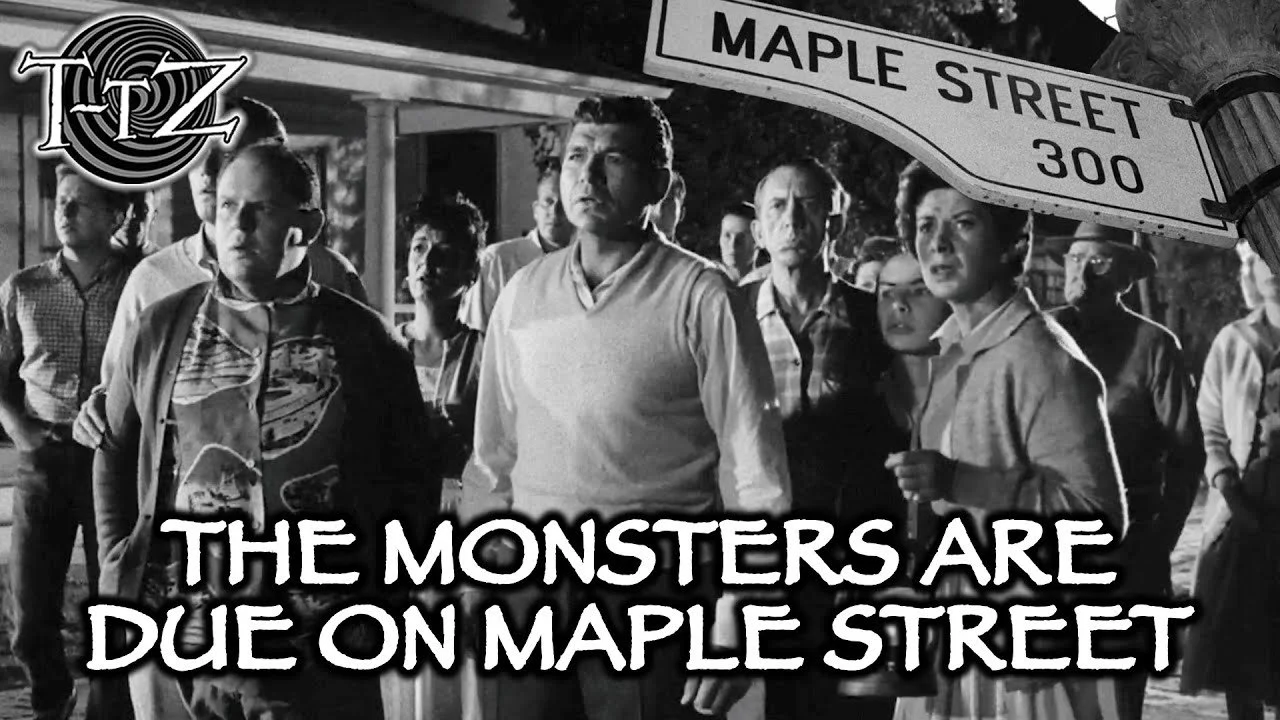
Serling, who was often described as the "angry young man" of the industry, had a complicated relationship with the entertainment capital. He once quipped: "Hollywood's a great place to live... if you're a grapefruit." Yet Hollywood gave him the platform, the actors, and the production infrastructure to realize episodes that have since entered the cultural vocabulary "Time Enough at Last," "To Serve Man," "The Monsters Are Due on Maple Street", each title now functioning less as an episode name and more as a shorthand for a particular dimension of human folly.
The show also launched or elevated careers that would define Hollywood for decades. A young William Shatner appeared in two celebrated episodes before becoming Captain Kirk. Robert Redford, Dennis Hopper, and Burt Reynolds all passed through the Zone early in their careers. The series became, in a sense, Hollywood's own twilight zone a liminal space between obscurity and stardom.
The phrase itself "the twilight zone" has since migrated from television into the vernacular. It is now used globally to describe any surreal, disorienting, or inexplicable experience. Few television series can claim to have contributed a new concept to the English language. The Twilight Zone did so almost incidentally.
From Screen to Theme Park: The Tourism Phenomenon
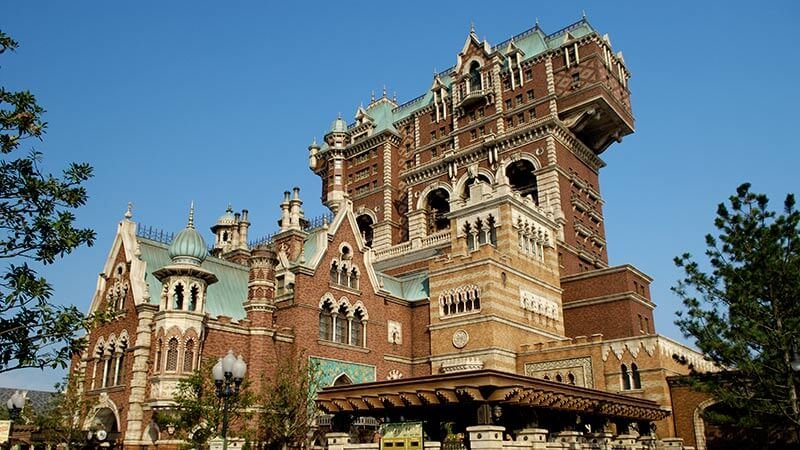
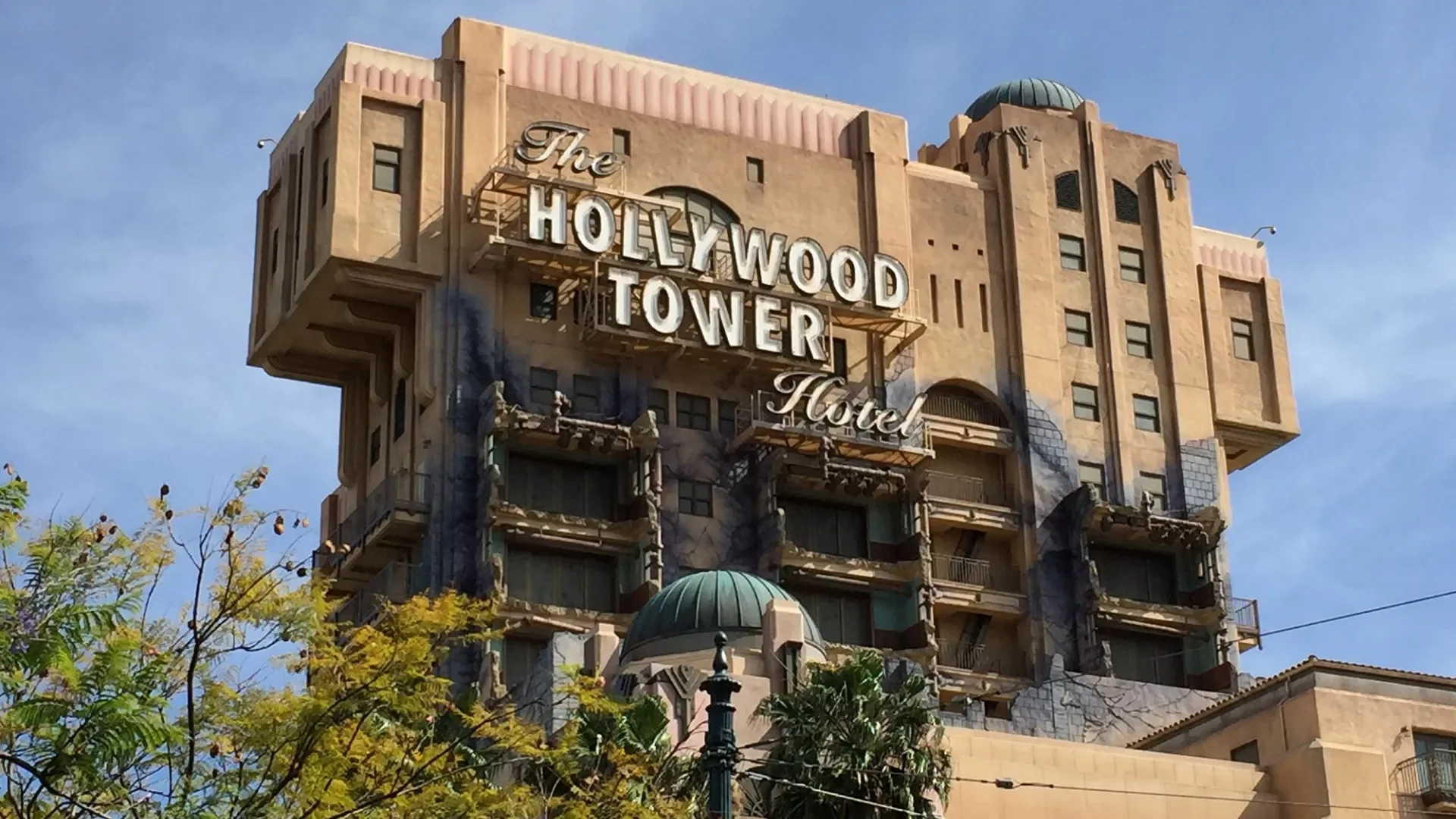
Perhaps the most vivid proof of The Twilight Zone's crossover from fiction into lived experience is Disney's Twilight Zone Tower of Terror a landmark attraction that has drawn millions of visitors since its opening at Disney's Hollywood Studios in 1994. The ride's premise is pure Serling: guests enter the abandoned Hollywood Tower Hotel, a once-glamorous establishment struck by lightning on Halloween night in 1939, causing five elevator passengers to vanish into the fifth dimension. A television in the dusty lobby flickers to life, and Rod Serling himself through archival footage and voice recreation welcomes riders into the Twilight Zone.
The attraction has since been replicated at Disneyland Paris (2007), while Tokyo DisneySea opened its own version with an original storyline in 2006. The Tower of Terror demonstrates something remarkable about The Twilight Zone's cultural gravity: it is one of the very few mid-twentieth-century television properties that has successfully translated into a physical, immersive tourism product, one that generates significant foot traffic, merchandise revenue, and destination appeal decades after the original series went off the air.
This is not merely a licensing arrangement. The Tower of Terror works because the emotional architecture of the ride suspense, disorientation, the sudden inversion of the familiar replicates the emotional architecture of the show. Visitors do not simply ride an elevator; they enter a narrative. In this sense, the attraction is perhaps the most faithful adaptation The Twilight Zone has ever received.
The Final Frontier: The Twilight Zone and Space
The Twilight Zone was, from its earliest episodes, preoccupied with space and this was not coincidental. The series debuted in 1959, two years after Sputnik and three years before John Glenn's orbital flight. America was entering the Space Age, and Serling understood that the cosmos represented the ultimate twilight zone: a territory where human knowledge ended and the unknown began.
Space-themed episodes recurred throughout the series' five-season run. "When the Sky Was Opened" (1959), the show's first astronaut episode, followed three men returning from humanity's first space flight, only to find themselves being erased from existence one by one. "The Parallel" explored an astronaut who returns from orbit to find himself in a subtly altered version of his own world, a premise that anticipated the multiverse concepts now central to both physics and popular culture. "The Long Morrow" imagined a forty-year solo journey into deep space, meditating on the costs of human ambition and the loneliness inherent in exploration.
What distinguished the show's treatment of space from the pulp science fiction of its era was Serling's insistence that the cosmos was not merely a setting but a condition, a state of existential exposure. Outer space, in The Twilight Zone, was always also inner space. The astronaut stranded on a distant planet was never simply lost geographically; he was lost philosophically, confronting questions about identity, memory, and belonging that no mission control could answer.
It is worth noting, too, that the show's production infrastructure and aesthetic sensibility fed directly into the broader science fiction ecosystem. Props and set pieces originally constructed for Forbidden Planet (1956) were reused in multiple Twilight Zone episodes, and the sound effects heard inside its spaceships would later resurface as the ambient sounds of the USS Enterprise on Star Trek, a show that owes a substantial creative debt to Serling's pioneering work.
The Zone That Never Closed
Rod Serling died in 1975, at the age of fifty. The show he created has, by now, outlived him by half a century revived in 1985, again in 2002, and most recently in 2019 under the stewardship of Jordan Peele, who described Serling as "a master of parable" and "a master of allegory" whose stories remain among "the most powerful weapons that people have against violence and hatred."
This is, ultimately, the real story of The Twilight Zone: not a story about a television show, but about the enduring power of fiction to tell truths that non-fiction cannot. Serling proved that a story about a man who wishes for time to read, or a neighborhood that tears itself apart over a power outage, or an astronaut who wakes up in the wrong version of his life, could illuminate the human condition more searchingly than any documentary or editorial.
The twilight zone, the actual one, the conceptual space Serling named is not a place you visit. It is a perspective you adopt. It is the recognition that reality is thinner than we think, that the familiar can become strange in an instant, and that the most important truths are often the ones we can only approach sideways, through the "wondrous dimension of imagination."
The door, as Serling reminded us, is always unlocked. You just need the key.