Selling Yesterday's Tomorrow: Retrofuturism, Theme Parks, and the Experience Economy
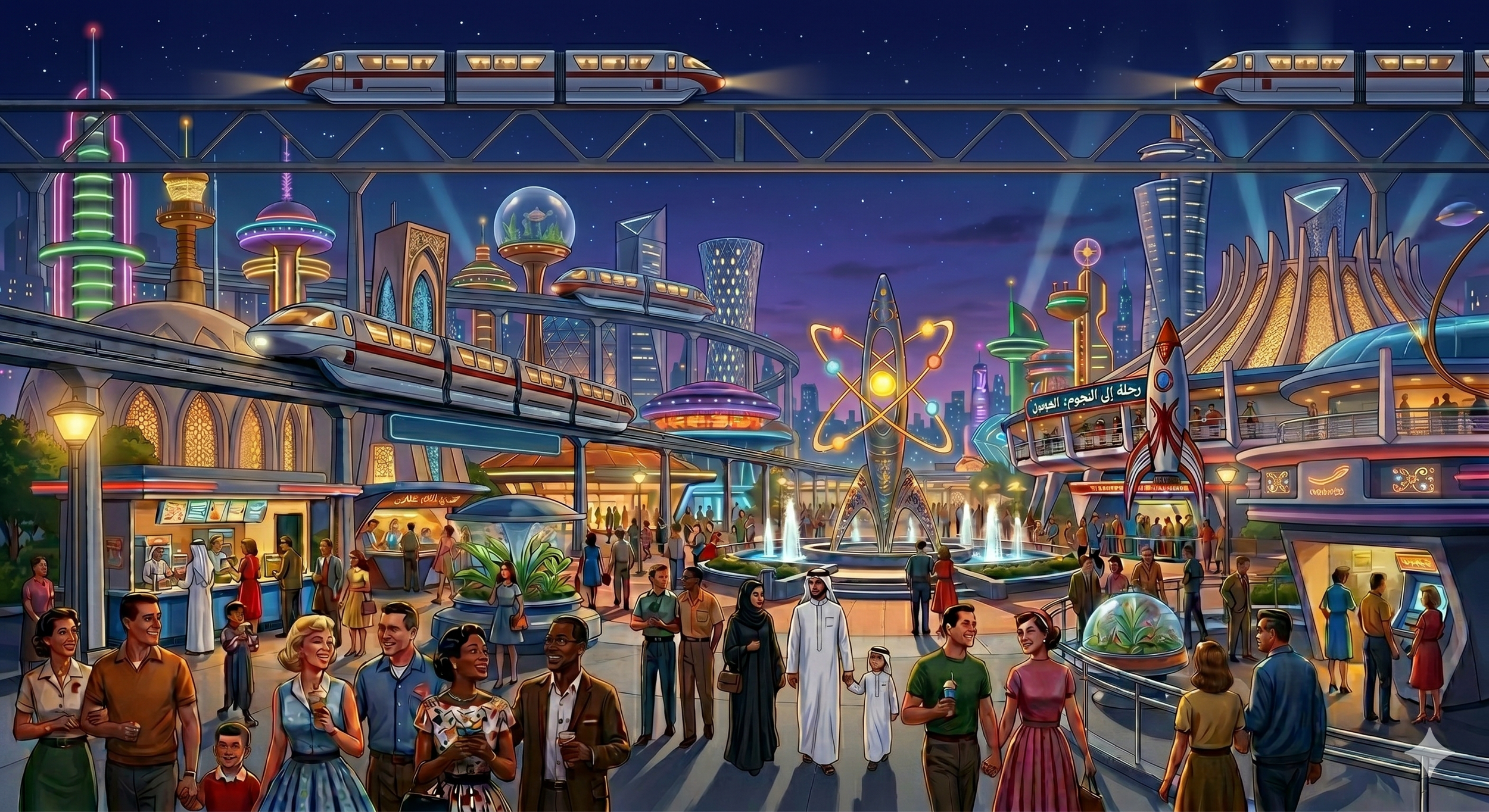
Retrofuturism Imagined Theme Park
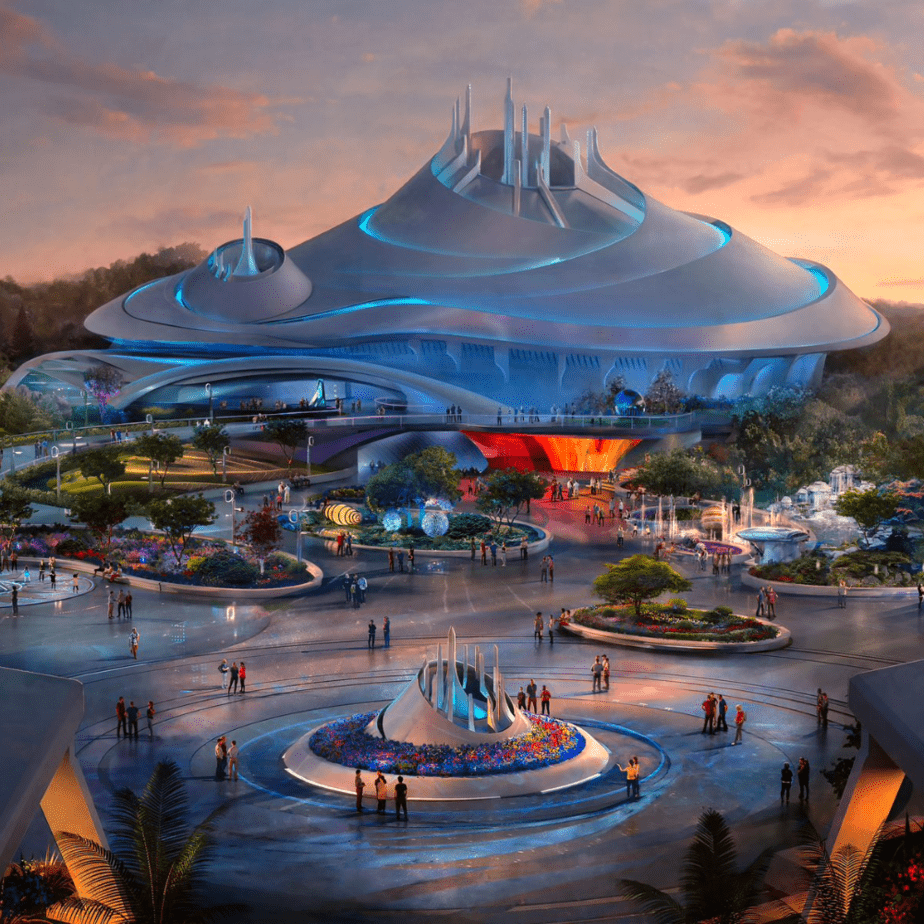
Theme parks have long been a retrofuturist proposition. Walt Disney's “Tomorrowland” built in 1955 was never really about the future; it was about the 1950s imagining the future and inviting visitors to inhabit that imagination as a consumable experience. Seven decades later, the industry remains anchored in the same logic: theme parks don't sell futures, they sell past futures carefully art-directed visions of what tomorrow was supposed to look like, wrapped in rides, spatial narratives, and emotional arcs.
What has evolved is the industry's self-awareness about why this works so reliably. through which we understand why this works. Pine and Gilmore's experience economy argued that economic value shifts from commodities to goods to services to experiences and that the most advanced offerings are those that are memorable, personal, and staged with intentionality. Retrofuturism fits this model almost perfectly. It layers familiarity (nostalgia) over novelty (futurity), producing an experience that feels simultaneously safe and surprising. The visitor knows the aesthetic vocabulary chrome, curves, utopian optimism but encounters it in a new spatial context. That gap between recognition and discovery is where the experience economy generates its premium.
This has implications for the tourist journey. If we think of the journey not as a linear transaction (arrive, consume, depart) but as a multi-phase arc — anticipation, arrival, immersion, reflection, and post-visit meaning-making — then retrofuturism operates across every stage. The aesthetic is instantly recognizable in pre-visit marketing, generating anticipation through visual nostalgia. On-site, it provides a coherent spatial grammar that orients the visitor without requiring explanation. And post-visit, it supplies a ready-made narrative: I visited the future as someone once imagined it. When visitors leave with a story they want to retell, the experience stops being consumption and starts functioning as identity currency. Retrofuturism makes that transfer easy. It hands the visitor a ready-made narrative: I visited the future as someone once imagined it.
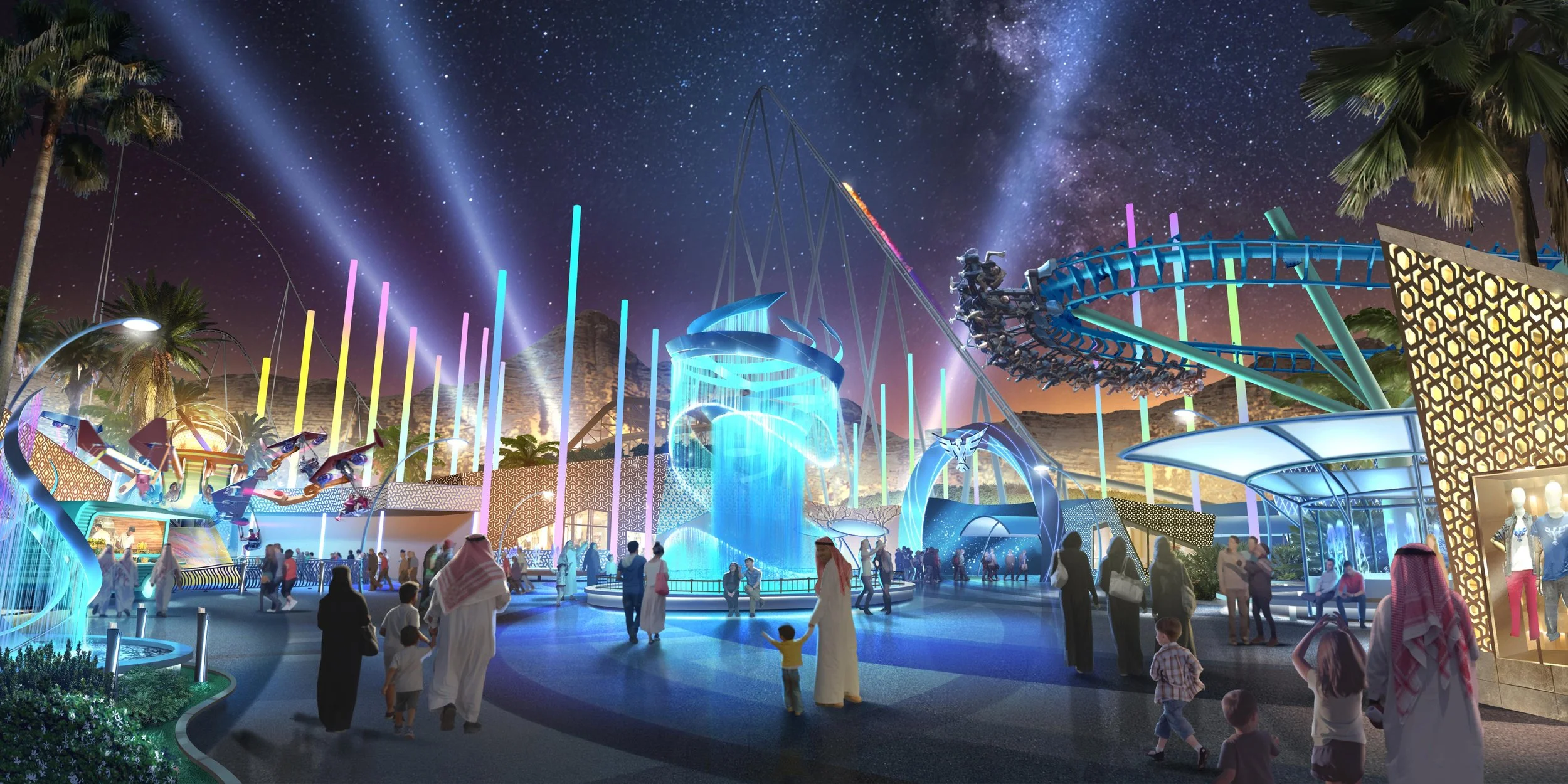
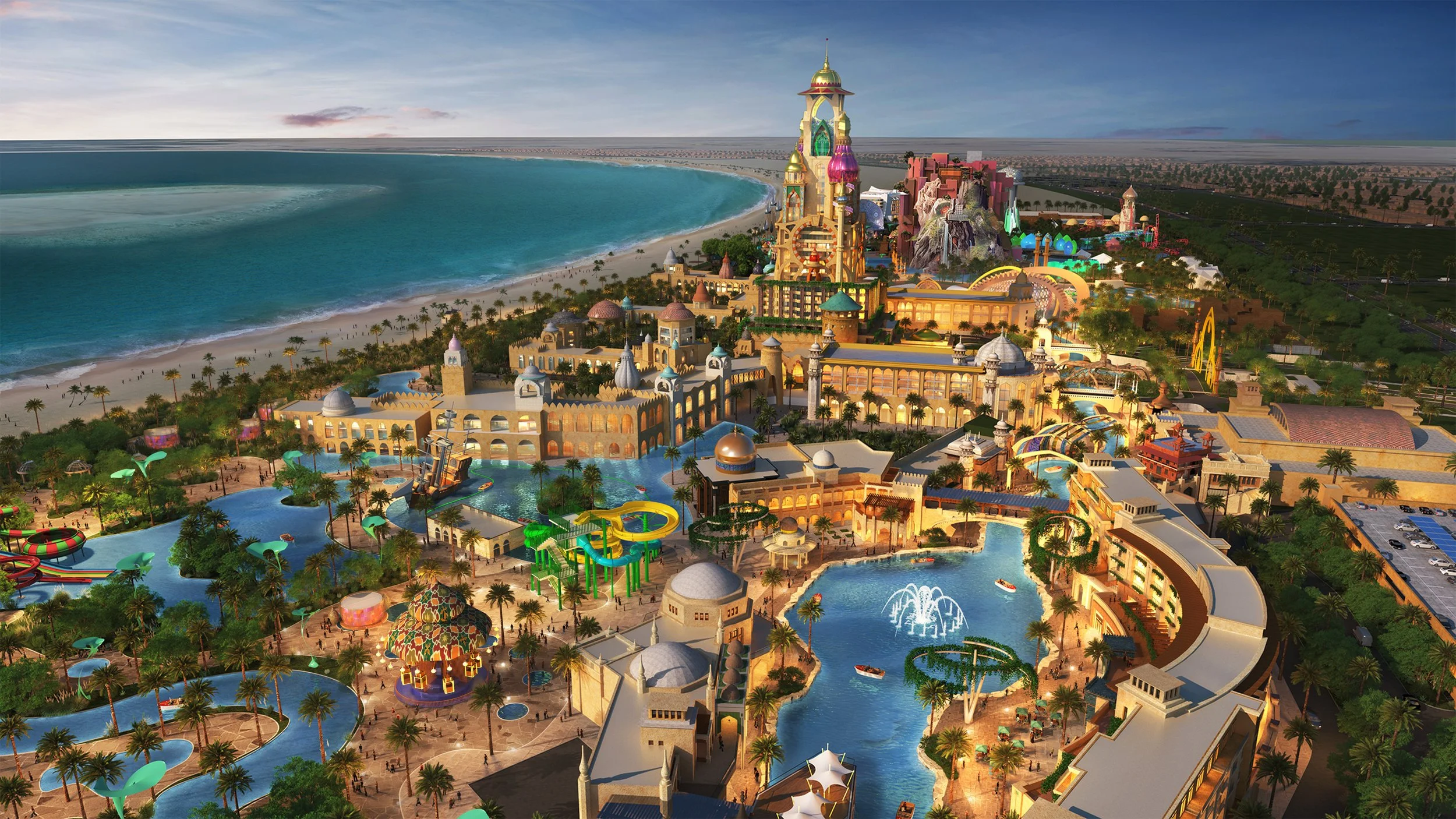
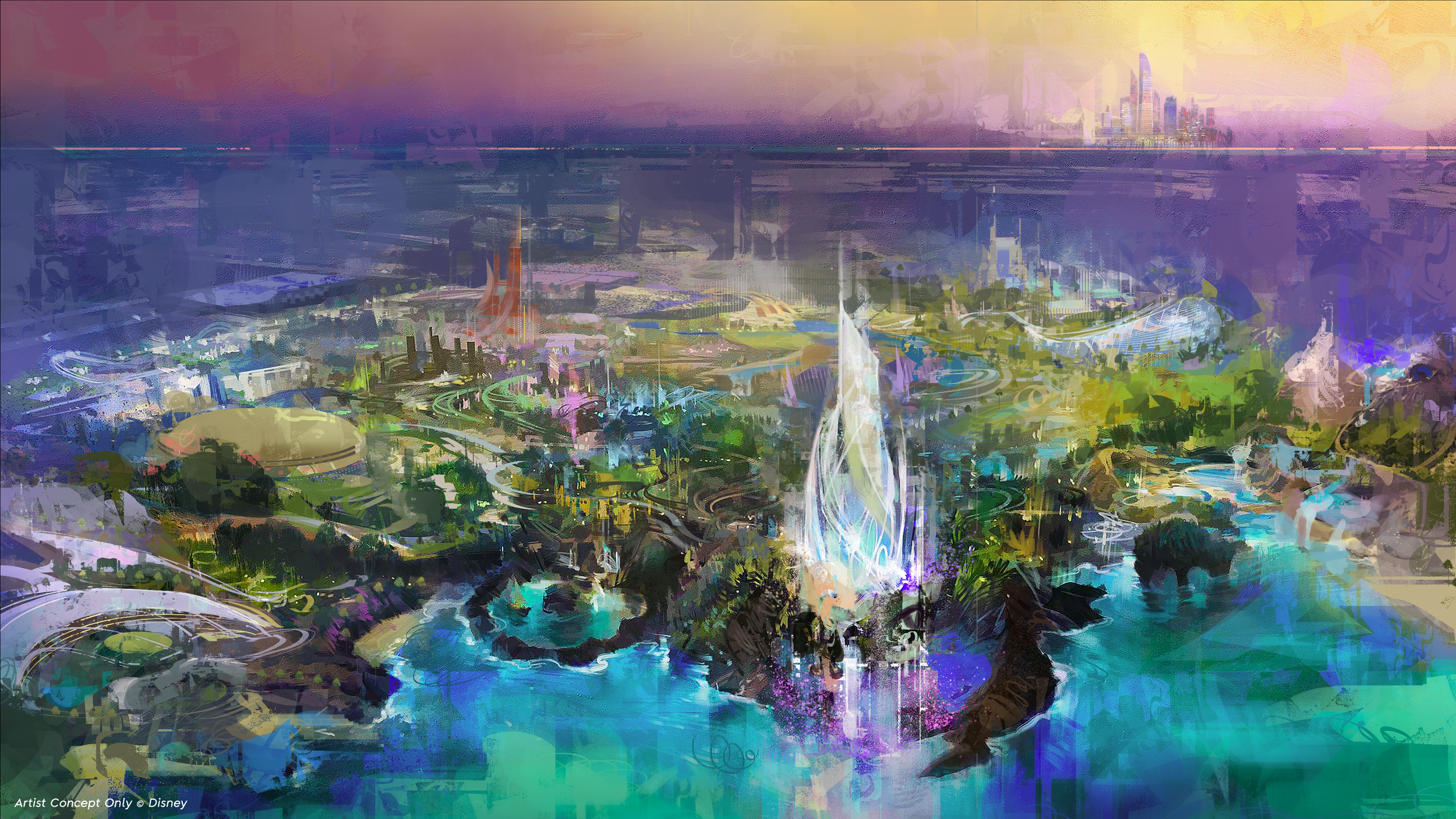
The GCC mega-entertainment projects illustrate this escalation. The Simaisma Project in Qatar, Saudi Arabia's Qiddiya, and Abu Dhabi's Yas Island are not building theme parks in the traditional sense, but rather they are building experiential destinations where the boundary between park and city dissolves. The retrofuturist dimension is subtle but present: these projects borrow the utopian confidence of mid-century world's fairs and Expo pavilions, scaling them into permanent urban leisure infrastructure. The visitor is not entering a park; they are entering a proposition about what Gulf modernity feels like.
The risk mirrors the one facing retrofuturism in tourism more broadly: the collapse of experience into spectacle. Pine and Gilmore themselves warned that staged experiences risk becoming hollow if they lack authenticity, what they later called the "authenticity paradox," where the more deliberately an experience is designed, the less genuine it can feel. In the theme park context, retrofuturism can easily become wallpaper: an aesthetic applied to roller coasters and food courts without embedding it in a coherent narrative about place, time, or meaning. When that happens, the tourist journey flattens, immersion becomes consumption, and reflection never arrives.
The more interesting frontier is where retrofuturism in theme parks intersects with cultural specificity. Universal and Disney have historically exported a Western retrofuturist vocabulary (Americana, atomic age, space race optimism). But what does a retrofuturist theme park look like when it draws on Arab, Asian, or African imaginaries of the future? What past futures exist in those traditions, and what happens when they become the organizing aesthetic of a billion-dollar entertainment destination? That's the unexplored territory, and the space where the theme park industry might evolve from selling nostalgic escapism to offering something closer to cultural time travel, where the journey the tourist takes is not out of the present but through the layered temporalities of a place.